Take ownership beyond your task.
Finishing your part is not the same as finishing the work. We stay involved, raise issues early and make sure the next person has what they need.
Not just what we say. It is the decisions we make when work gets real — how we think, take ownership, speak with care and give each other room to grow.

Small team. Shared responsibility.
Culture is easy to describe when everything is going well. You see the real one when a deadline shifts, an idea is challenged or someone needs help.
No one should be left alone with a difficult problem simply because it falls outside their job title.
Finishing your part is not the same as finishing the work. We stay involved, raise issues early and make sure the next person has what they need.
We ask when something is unclear, challenge an idea when it needs challenging and speak up before a small problem becomes someone else’s surprise.
We care about the details, share what we learn and give feedback that helps someone improve. Good work should leave the team stronger, too.
Some days begin with a clear brief. Others begin with ten open questions. Either way, you should have room to think, ask for help and contribute more than just the task assigned to you.
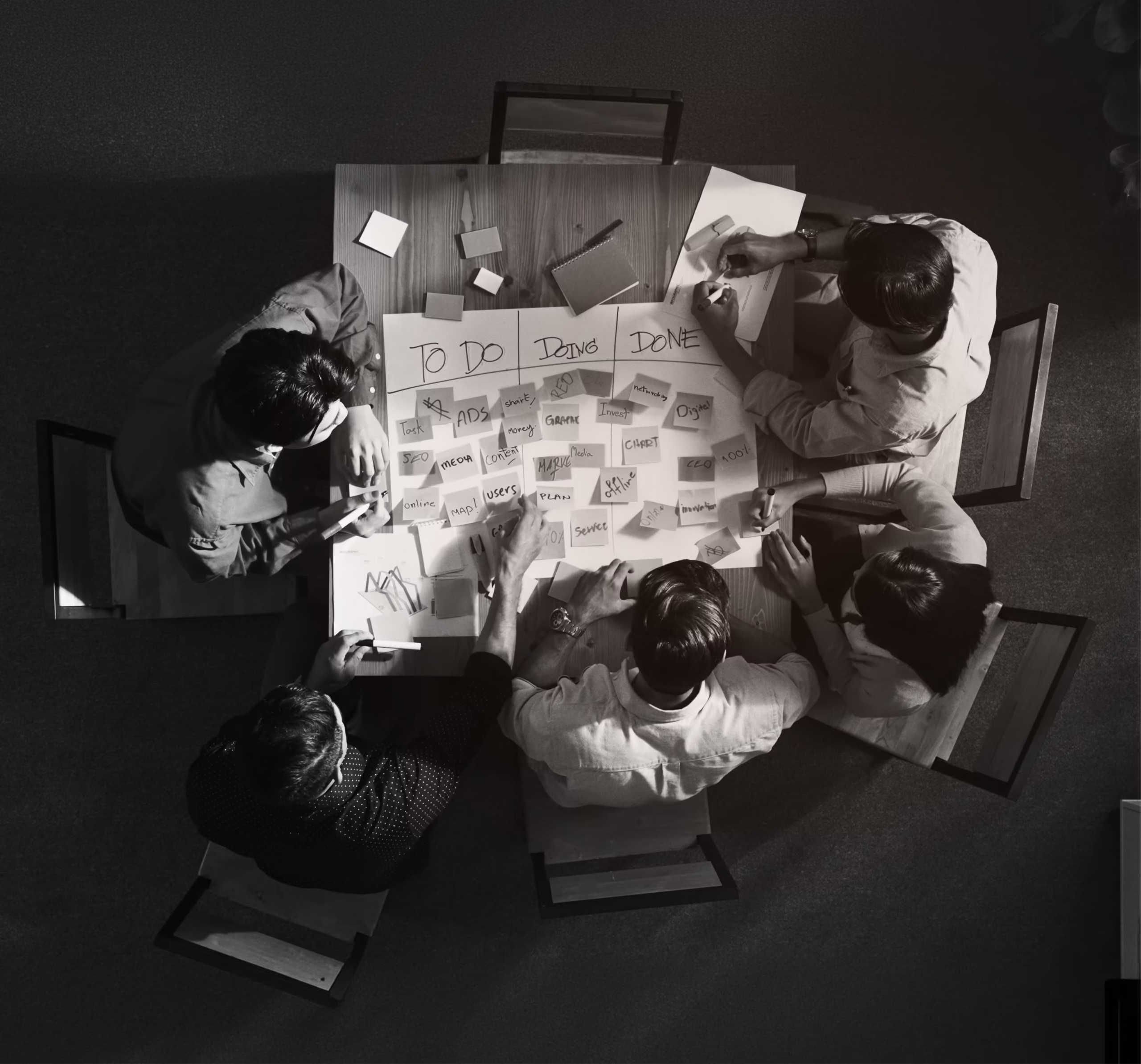
You can ask the question early instead of spending hours pretending the brief makes sense.
You can bring someone into the problem, challenge the first answer and find a better one together.
You leave the next person with context, not a puzzle they have to solve on their own.
We do not expect every day to be smooth. We want the way we work together to make difficult days easier.
PEOPLE BEFORE PROCESSWe want people who care enough to keep getting better. That takes more than being handed new tasks. It takes useful feedback, context behind decisions and room to try things you have not done before.
More responsibility should come with more context, not just more pressure.
Feedback should help you understand the thinking, not leave you guessing which version someone prefers. When something needs to change, the reason matters too.
As your judgement grows, you should have room to contribute earlier, suggest a direction and take responsibility for more of the outcome — with the context needed to do it well.
Good ideas should be considered on their merit, not only on who suggests them. We want people to bring their thinking into the work, test it thoughtfully and learn from what happens next.
Growth is not about being the person who already knows every answer. It is about becoming someone who can ask better questions, make clearer decisions and help others move forward.
You do not have to think like everyone else to belong here. Better decisions happen when people feel able to share a different view and know it will be heard.
Your experience may reveal something the rest of the team has not considered.
A quieter person may have the question that changes how everyone understands the problem.
Once a direction is agreed, we help one another turn it into work we can all stand behind.
A missed deadline should never come as a surprise at handover. Here is how we aim to handle a change in the work.
The work takes longer than planned. Another teammate is waiting on it.
Say what changed, who it affects and where help is needed. An early conversation gives everyone time to respond.
Revisit the priorities together, make the next handover clear and follow through on what we agree.

Every person brings more than the skills listed in their job description. They bring a way of thinking, a different perspective and experiences that shape how they see the work.
Sometimes the most valuable contribution is a question that changes the direction of a project, a detail someone else missed or the time taken to help a teammate understand the problem.
We want those contributions to be seen and valued, even when they do not appear in a project brief.
Ambitious work needs attention, clear priorities and people who can speak up when something is not working. We want to make room for all three.
Some problems need conversation. Others need uninterrupted attention. We aim to make space for both instead of filling every hour with meetings and messages.
Deadlines change and unexpected work happens. When the load becomes difficult, we want people to say so early enough to rethink priorities and agree on a workable plan together.
There is no one type of person who belongs here. What matters is how we bring our thinking into the work—and how we help one another do it well.
Curiosity to understand the problem. Care for the details. The confidence to share an idea, hear another perspective and keep learning along the way.
We work to provide clear context, constructive feedback and people you can turn to when the answer is not obvious. As you grow, there should be room for greater responsibility.
If the way we think, work and look after one another feels like your kind of place, explore what being part of Vyasti could look like. Come for work worth caring about. Grow alongside people who care, too.
Bring your curiosity. Keep your point of view. Build alongside people who care about the work and one another.